Stylized Pencil: A Smart School-Era Charm for Craft Fairs
First Impression: Nostalgic, Clean, and Instantly Recognizable
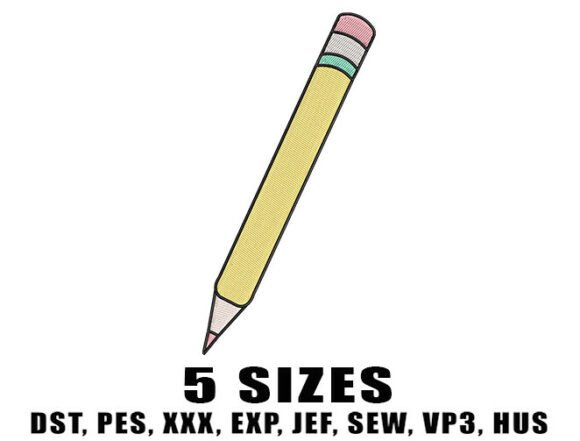
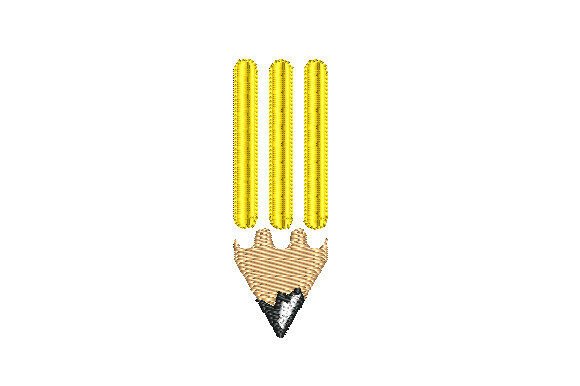
As an embroidery designer who’s stitched over 300 craft fair booths in the past decade, my gut reaction to Stylized Pencil is immediate: this isn’t just another school-themed motif—it’s a distilled moment of quiet confidence. It feels both minimal and premium, with that subtle warmth of vintage stationery but zero kitsch. No cartoonish erasers or exaggerated grooves—just clean lines, intentional negative space, and the elegant rhythm of split satin stitches that catch light like real pencil wood grain. It reads as modern-rustic, not childish or overly academic. That matters when your booth shares space with hand-poured candles and ceramic mugs—Stylized Pencil doesn’t shout; it invites closer looking.
Where It Shines on Craft Fair Products
On a crowded table, Stylized Pencil performs strongest where simplicity meets utility:
- Tote bag design: Centered on the lower third of a natural canvas tote, it reads clearly from six feet away—and feels intentional, not decorative filler. Pair it with a single-line quote (“Write boldly” or “Notes matter”) for instant cohesion.
- Apron embroidery: Left-chest placement (2.5–3" wide) gives teachers, baristas, and makers a subtle badge of quiet professionalism—not novelty, but identity.
- Tea towel embroidery: Works beautifully near the hem or corner. The split satin stitches hold up well on medium-weight cotton towels, especially when paired with contrasting thread (e.g., graphite gray on oatmeal linen).
- Embroidered patch: At 2.25", it scales down cleanly—no detail loss. Ideal for iron-on or sew-on use on denim jackets, backpacks, or student portfolios.
- Fabric pouches & pillow covers: Its balanced proportions anchor asymmetrical layouts. On a navy linen pouch, it adds tactile sophistication without competing with texture.
It’s less effective on curved cap fronts (distortion risk) or ultra-dense fabric like heavy twill—unless you adjust stabilizer and test first. And skip dark fabric unless you’re using high-contrast thread: the subtlety of split satin fades fast on charcoal or black.
What Makes It Sell—Beyond the Stitch
Stylized Pencil taps into three reliable craft fair drivers: nostalgia with restraint, cross-audience appeal, and brand-ready versatility. Teachers buy it for classroom gifts. Writers grab it for journaling kits. Designers love it for boutique packaging. Even non-school buyers respond—it’s not about curriculum; it’s about thoughtfulness, craft, and the quiet dignity of analog tools.
Photographed well, it converts online: clean white background, soft shadow, one real-life context shot (e.g., pinned to a corkboard beside a real pencil and notebook). As a digital embroidery file, it’s highly listable on Etsy—especially tagged with “teacher gift,” “stationery lover,” “minimal embroidery,” and “school embroidery”—but avoid overloading “back to school” unless your listing launches in July/August.
Production Reality Check: What You Must Test Before Booth Day
This isn’t a plug-and-stitch file. As a working embroidery designer, I treat every machine embroidery design like a prototype—not a promise. Here’s what Stylized Pencil demands:
- Test on scrap fabric matching your final product (e.g., terry cloth for towels, duck canvas for totes).
- Check thread contrast: Split satin relies on sheen and dimension—low-contrast combos (beige on cream) vanish. Go bold: charcoal on oat, navy on natural, or even rust on sand.
- Review spacing and stitch density: Dense satin areas can pucker if hooped too tightly—or bleed on textured surfaces. Light stabilizer + medium tear-away works best for most applications.
- Confirm hoop size compatibility: If your machine maxes at 4x4”, verify the design fits comfortably inside—not crammed to the edge.
- Create at least one real mockup before ordering bulk fabric. A single embroidered tea towel tells you more than ten printable mockups.
- Compare fabric colors side-by-side: Dye lots vary. What looks warm in daylight may read cool under booth lighting.
- Confirm commercial licensing before selling finished products. This is non-negotiable for any commercial embroidery use—even at a local market.
Careful-Use Notes: Protect Your Time and Reputation
Don’t assume Stylized Pencil is “small and simple.” Those split satin stitches? They’re beautiful—but they demand attention. Tiny details (like the subtle graphite tip gradient or wood-grain direction) can blur on thick fabric or low-res hoops. Avoid scaling below 1.75” unless you’ve verified clarity on your specific machine and thread combo. And never skip stabilizer on textured towels or curved caps—the design will shift, distort, or lose definition.
Also: if your target buyer is a teacher or creative entrepreneur, they’ll notice craftsmanship. A slightly puckered or misaligned Stylized Pencil undermines the handmade quality you’re selling. Consistency builds trust. Batch-test five units before committing to 50.
Why It Belongs in Your Next Craft Fair Lineup
In a sea of florals, animals, and slogans, Stylized Pencil stands out by standing still. It doesn’t chase trends—it anchors them. It elevates a basic tote into a thoughtful gift. It turns an apron into a signature piece. It gives your booth visual breathing room while still communicating clearly: this is made with care, for people who value intention.
For the Etsy seller, it’s evergreen—not seasonal. For the small shop product line, it pairs effortlessly with neutral palettes and other minimalist design assets. And for the handmade product maker juggling time, thread, and booth space? It’s efficient, expressive, and quietly confident—just like the pencil it honors.