Pens: A Playful, Practical Embroidery Design for School & Everyday Charm
First Impressions: Bright, Bold, and Unapologetically Friendly
When I opened the Pens embroidery file, I didn’t see just another school-themed motif—I saw a design with personality. It’s cheerful without being cutesy, graphic without feeling sterile, and detailed enough to hold attention but not so dense it’ll bog down a home machine. The layout feels balanced: clean outlines, intentional negative space, and a rhythm in the line work that suggests movement—like ink flowing or a hand sketching mid-thought. As an experienced designer who’s stitched hundreds of school-related projects, I immediately pictured this on a canvas tote for a teacher’s lounge, or as a subtle chest accent on a child’s organic cotton tee. It doesn’t shout “back-to-school”—it smiles.
Real-Life Test: Stitching Pens on a Linen-Cotton Tea Towel
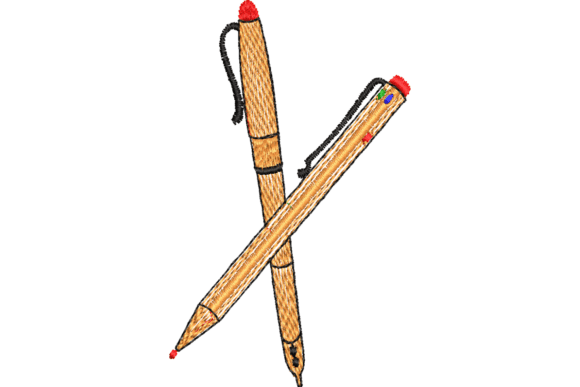
Last week, I used Pens for a small-batch kitchen towel collection—part of a boutique gift set for local educators. I chose medium-weight linen-cotton blend (a favorite for its texture and drape) and paired it with high-quality 40-weight rayon thread in cobalt, charcoal, and cream. With light tear-away stabilizer underneath and a standard 4" x 4" hoop, the design stitched cleanly. No skipped stitches, no thread breaks—even through the subtle weave variation. What stood out was how well the lines held definition: the tapered tip of each pen, the slight curve of the clip, the crispness of the barrel details. Customers later told me they loved how “hand-drawn” it felt—not stiff or overly digitized. That authenticity matters, especially for handmade products meant to feel personal, not mass-produced.
Where Pens Shines (and Where It Needs Thought)
- Custom apparel: Works beautifully on crewneck sweatshirts (left-chest placement), lightweight t-shirts (with cutaway stabilizer), and structured caps (if sized appropriately for the front panel).
- Home + lifestyle goods: Ideal for tea towels, aprons, pillow covers, and baby bibs—especially when you want a quiet nod to creativity or learning without overwhelming the item.
- Personalized gifts: Pairs effortlessly with monogrammed initials or a short name in a complementary script font. Think: “Maya’s Pens” on a backpack patch or a nursery wall hanging.
- Etsy & small shop product: Its versatility across categories means one Pens embroidery file can support multiple listings—tote bag design, sweatshirt embroidery, baby embroidery—without looking repetitive.
Use With Care On…
Avoid placing Pens on ultra-thin fabrics like voile or single-layer silk without extra stabilizing—it’s got enough line weight to pull or pucker if unsupported. On highly textured surfaces (bouclé knits, heavy terry cloth), test first: some fine details may soften or disappear. And while it reads clearly on dark fabric with light thread, avoid reversing the contrast on very dense black backgrounds unless you’re using metallic or high-sheen thread—the fill stitch density isn’t built for maximum opacity at tiny scale. Also, skip curved surfaces like baseball cap crowns unless you’ve resized it down to under 2.5" wide; the proportions shift, and the clip detail loses clarity.
What Pens Adds to Your Finished Product—Beyond the Stitch
This isn’t just about aesthetics—it’s about perception. When customers see Pens on a handmade tote or embroidered patch, they register intentionality. It signals care in design choice, not just execution. For craft businesses, that builds trust: buyers know you’re selecting assets that reinforce your brand voice—whether that’s warm and approachable (for a children’s boutique), quietly scholarly (for a stationery shop), or creatively grounded (for an art-supply maker). In holiday embroidery or wedding gift contexts, Pens adds charm without cliché—imagine it stitched beside a tiny pencil case on a linen drawstring bag for a new grad. It’s recognizable, but never generic.
Designer Notes You’ll Actually Use
- Always test on scrap fabric first—especially if stitching on stretchy knits or layered garments like hoodies.
- Check thread color contrast before committing. Try it in black-and-white mockups to assess legibility on both light and dark backgrounds.
- Review stitch density visually in your embroidery software. If you plan to use it commercially, confirm whether the file includes satin stitch elements (which hold up better on high-wear items like aprons) or relies heavily on fill stitch (better suited for stable, low-friction surfaces).
- Confirm hoop size compatibility—some versions of Pens may come in multiple sizes; match the version to your most-used hoop to minimize re-hooping mid-project.
- Inspect small corners and transitions, like the curve of the pen clip or the tip’s taper. These are where digitizing quality shows—and where problems appear on low-res files.
- Verify licensing before selling finished items or bundling Pens into digital embroidery kits. As a School category embroidery file, it may carry usage limits for commercial embroidery or resale of the digital file itself.
Final Thought: Pens Is More Than a Motif—It’s a Quiet Confidence Builder
In my studio, Pens has become a go-to when I need something that says “thoughtful, capable, joyful”—without needing explanation. It works for the Etsy seller launching her first embroidered stationery line, the small shop owner refreshing back-to-school merch, or the parent making personalized gifts for a teacher appreciation week. It’s not flashy—but it’s reliable, expressive, and deeply usable. That’s rare. And in the world of machine embroidery design, reliability is the highest compliment.