Class of 2039 Embroidery Design
A Playful, Heartfelt Keepsake for Early Graduation Moments
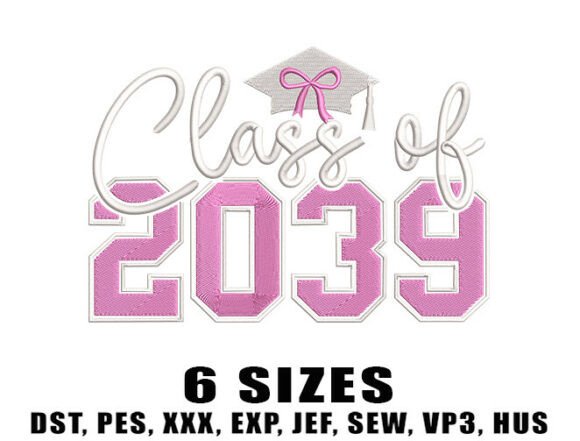
As an embroidery designer who’s developed collections for boutique apparel brands and preschool-focused lifestyle lines for over a decade, I approached the Class of 2039 Embroidery Design with both curiosity and practical scrutiny. The first impression? It’s genuinely charming — not overly cutesy, not stiffly formal, but warm and intentional. The cap-and-bow motif carries a soft, joyful energy — think kindergarten graduation photoshoots, not corporate commencement ceremonies. The line work is clean, the curves are smooth, and the balance between negative space and stitch coverage suggests thoughtful digitizing. It reads as playful yet polished, with just enough detail to feel special without overwhelming small garments.
How It Performs Across Boutique Apparel Categories
This design shines brightest where emotional resonance meets wearability — especially on neutral sweatshirts and pastel hoodies. On a heather grey crewneck, Size 3 (5.8 inches) centered at chest level delivers gentle presence: large enough to read clearly in lifestyle product photos, small enough to avoid dominating the garment’s silhouette. For oversized hoodies popular with moms and educators alike, Size 4 (6.8 inches) works beautifully on the back — positioned just below the collarbone for balanced visual weight.
For sleeve accents or subtle side-seam placements on t-shirts, I recommend Size 2 (4.8 inches) — it maintains proportion without pulling or distorting on stretchy knits. On denim jackets or canvas tote bags, the design holds up well due to its moderate stitch density and open layout; there’s no heavy fill stitching that might stiffen fabric or crack over time. And on cozy seasonal outfits — think fleece-lined zip-ups or sherpa-lined hoods — the cap-and-bow motif reads warmly against textured surfaces, adding personality without visual clutter.
Smart Placement & Fabric Considerations
Because the Class of 2039 Embroidery Design includes five scalable sizes — from 3.8 inches to 7 inches — you gain real flexibility for commercial embroidery projects. That said, size selection matters deeply depending on your substrate:
- Small chest placement on youth sweatshirts? Stick with Sizes 1–2. Anything larger risks crowding the placket or distorting near the zipper pull.
- Stretchy fabric like cotton-spandex blends? Use light cutaway stabilizer and test tension first — the bow’s delicate loops respond well to stable backing but can pucker if hooped too tightly.
- Fleece or ribbed fabric? Prioritize medium-weight tear-away plus a light topping. The cap’s brim and bow ribbon benefit from surface stability to retain crisp edges.
- Dark garments? Opt for high-contrast thread colors — ivory or pale mint against navy or charcoal creates instant visual lift without glare.
- Curved surfaces (like shoulder seams or rounded tote bag gussets)? Size 3 offers the best compromise: large enough for legibility, compact enough to minimize distortion.
Design Impact on Brand Identity & Customer Connection
When used intentionally, the Class of 2039 Embroidery Design does more than decorate — it signals care, celebration, and milestone awareness. For Etsy sellers and small shop owners, this kind of emotionally intelligent design helps build trust: parents recognize authenticity in the details — the gentle curve of the bow, the slightly tilted cap angle, the absence of harsh angles or cartoonish exaggeration. It supports a boutique brand voice that’s thoughtful, inclusive, and quietly premium.
In listings and social media graphics, the design photographs cleanly — minimal shadowing, clear outlines, and natural thread flow make it ideal for printable mockups. It scales well across platforms: Instagram carousels show off size variations, Pinterest pins highlight seasonal pairings (e.g., “Class of 2039 + Easter Basket Liner”), and Etsy thumbnails pop even at thumbnail size thanks to strong shape recognition.
Practical Designer Notes Before You Stitch
Before committing to production, here’s what I always verify — and what you should too:
- Test on scrap fabric that matches your final garment — especially important for fleece, French terry, or ribbed cuffs.
- Confirm stabilizer choice based on fabric texture and stretch. Light cutaway works for most sweatshirt knits; medium tear-away suits stable cotton totes.
- Review thread color contrast. The design doesn’t include thread charts, so choose hues that enhance readability — avoid low-contrast combos like black-on-charcoal unless aiming for minimalist subtlety.
- Check hoop size requirements for each size. Creative Fabrica lists dimensions, but always cross-reference with your machine’s maximum hoop capacity before digitizing or nesting.
- Inspect stitch density visually in your embroidery software — look for tight clusters near the bow knot or cap seam. If present, consider slight underlay adjustment or reduced density in those zones.
- Test on similar garment fabric — a pre-washed, finished hoodie behaves differently than raw fabric swatches.
- Compare placement options across garment types. Chest, sleeve, back, and pocket placements all change how the design reads in context.
- Review Creative Fabrica product details and licensing carefully. As a School category embroidery file, confirm permitted uses for commercial embroidery products before listing finished apparel.
Final Thoughts for Creative Entrepreneurs
The Class of 2039 Embroidery Design isn’t just another school-themed machine embroidery design — it’s a versatile storytelling tool. Whether you’re building a custom apparel line for preschool families, launching a seasonal capsule collection, or expanding your Etsy shop’s handmade product range, this design bridges sentiment and scalability. Its consistent proportions, balanced detail level, and warm visual tone make it easy to integrate into broader branding systems — pairing naturally with coordinating fonts, packaging motifs, or companion designs like tiny diploma scrolls or alphabet blocks.
For embroidery shops and small clothing brands, it’s a low-risk, high-return addition to your digital embroidery file library. No complicated layering, no excessive trims, no fragile satin stitches — just clean, confident, celebratory stitching ready for real-world wear. When executed thoughtfully, it transforms a simple sweatshirt into a keepsake. And in today’s market, that kind of emotional value is exactly what turns one-time buyers into repeat customers.