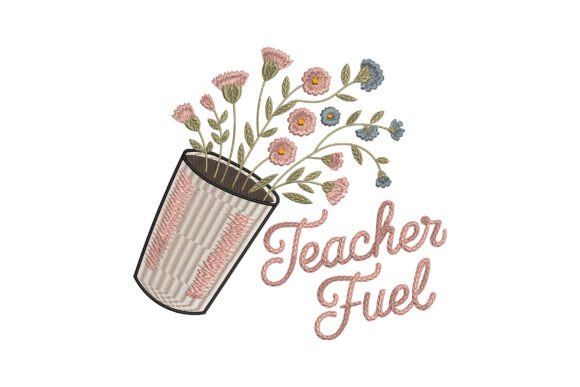
Floral Teacher Fuel Embroidery
A Designer’s First Look: Charm with Clear Intent
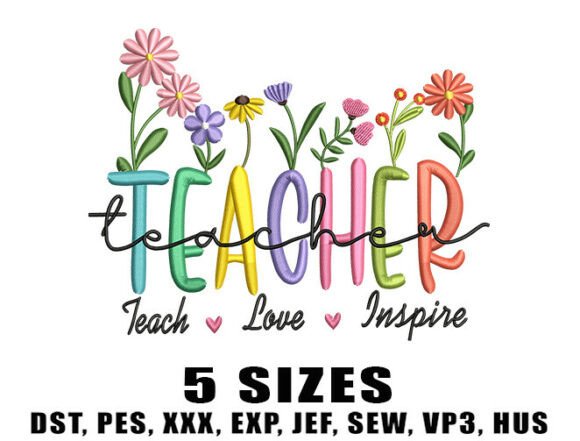
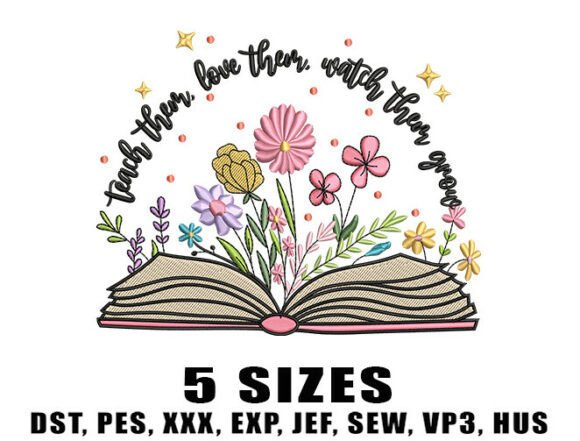
When I opened Floral Teacher Fuel Embroidery, I didn’t just see a school-themed motif—I saw intention. The design balances botanical softness with quiet professionalism: delicate stems, open blossoms, and subtle leafwork wrap around a central phrase that feels warm, not cutesy. It’s not overly literal (no apples or chalkboards), which gives it breathing room across age groups and settings. As a designer who regularly selects embroidery files for boutique merchandise and custom client work, this one landed right in my “versatile but distinctive” sweet spot—especially for educators who want personality without cliché.
Real-World Test: Stitching It on a Linen-Cotton Tea Towel
Last week, I used Floral Teacher Fuel Embroidery on a natural linen-cotton blend tea towel—intended for a local teacher appreciation pop-up shop. I chose medium-weight tear-away stabilizer and matched thread tones to the fabric’s warmth: muted sage greens, creamy ivory, and soft terracotta. The result? A finished product that felt handmade *and* intentional—not busy, not bland. Customers paused at the display. One teacher held it up, smiled, and said, “That’s *me*—not the ‘world’s best teacher’ mug version, but the real, caffeinated, plant-loving version.” That kind of resonance is rare. It speaks to how well the design’s rhythm supports both visual calm and quiet storytelling.
Where This Embroidery File Shines—and Where It Needs Thought
Floral Teacher Fuel Embroidery works beautifully on stable, medium-weight fabrics: cotton sweatshirts, canvas tote bags, denim aprons, and structured pillow covers. Its layout flows naturally along curves—ideal for the front chest panel of a crewneck or the rounded corner of a kitchen towel. As a machine embroidery design, it avoids over-compression: no tiny lettering buried in petals, no overlapping satin stitch zones that risk shadowing. That means fewer re-hooping moments and cleaner results for Etsy sellers stitching 20+ units in a batch.
But here’s where attention matters: on thin or stretchy knits (like lightweight t-shirts), I recommend testing stitch density first. The floral elements use gentle fill stitch transitions—not aggressive density—but if your machine runs hot or your stabilizer shifts, those open petal shapes can lose definition. On dark fabric, avoid light thread unless you’re using high-contrast stabilizer underneath; the design’s airy structure relies on tonal layering, not sheer opacity. And skip curved surfaces like baseball caps unless you’ve confirmed hoop compatibility—the stem line arcs just enough to pull on tight curves.
What It Adds to Your Handmade Product—Beyond Pretty Stitches
This isn’t just decoration. Floral Teacher Fuel Embroidery elevates perceived value because it reads as *curated*, not generic. When stitched cleanly on a baby onesie or a boutique-style apron, it signals care in selection—not just execution. For craft business owners, that translates to stronger buyer engagement: customers remember designs that feel personal, not mass-produced. I’ve seen similar floral-school motifs fall flat when they lean too juvenile or too stiff. This one avoids both traps. It’s mature enough for a wedding gift for a teacher-bride, gentle enough for nursery decor, and grounded enough for year-round small shop merchandise.
It also supports brand consistency. If you sell coordinated teacher-themed goods—say, embroidered towels + printable lesson planners + enamel pins—Floral Teacher Fuel Embroidery holds its own as a tactile anchor. Its proportions scale well: large enough to read from three feet away on a tote, detailed enough to reward close inspection on a patch. That duality makes it useful across formats—whether you’re building digital embroidery file bundles or physical craft fair inventory.
Practical Designer Notes Before You Stitch
- Always test on scrap fabric first—especially if pairing with textured weaves or blends. Linen slubs or terry loops can catch delicate stem outlines.
- Review thread color contrast in natural light. What reads as soft contrast on screen may vanish on oatmeal-colored cotton.
- Check stitch density visually in your embroidery software—not just the count. Dense fill areas near flower centers should still allow fabric breathability.
- Confirm hoop size before hooping your final piece. While the design fits comfortably in a 4x4 hoop, some versions may extend slightly—verify before committing to a tight-fitting garment panel.
- Inspect small details at 200% zoom: leaf tips, petal edges, and word spacing. Clarity here determines whether it reads as professional or rushed.
- Test black-and-white mockups to assess silhouette strength. A strong outline ensures recognition even in low-res listings or printed catalogs.
- Use proper stabilizer—light cutaway for knits, tear-away for stable wovens. Skipping this step risks puckering that flattens the floral dimensionality.
- Verify licensing before selling finished items or bundling the digital embroidery file commercially. Not all School-category designs permit resale of stitched products—check terms carefully.
Final Thought: A Quietly Confident Choice
Floral Teacher Fuel Embroidery won’t shout. It doesn’t need to. Its strength lies in cohesion—between theme and texture, detail and restraint, professionalism and warmth. Whether you’re an Etsy seller prepping holiday embroidery kits, a small shop owner refreshing teacher appreciation stock, or a hobbyist stitching a personalized gift for your child’s favorite educator, this design earns its place in your embroidery project queue. It’s thoughtful, adaptable, and quietly confident—exactly what a well-chosen machine embroidery design should be.